
What Is Root Canal Treatment? How Is It Performed, Does It Hurt and How Long Does It Take?
Root canal treatment is an endodontic procedure intended to preserve a natural tooth when the pulp tissue inside it becomes inflamed, infected or irreversibly damaged. Deep decay, dental trauma, cracks and previous large restorations can affect the tissues inside a tooth over time. In such cases, removing only the decay visible from the outside may not be enough.
When the blood vessels and nerve tissue inside a tooth are damaged, symptoms may include sensitivity to hot and cold, pain that worsens at night, discomfort when chewing or swelling around the tooth. However, in some cases a tooth can remain infected for a long time without obvious symptoms. The absence of pain therefore does not mean that a tooth is completely healthy.
The aim of root canal treatment is to remove diseased tissue inside the tooth, clean the root canals and fill them with suitable materials. After treatment, the upper part of the tooth may be protected with a filling, onlay, crown or another restoration, depending on the amount of healthy tissue remaining.
Why Do the Tissues Inside a Tooth Become Damaged?
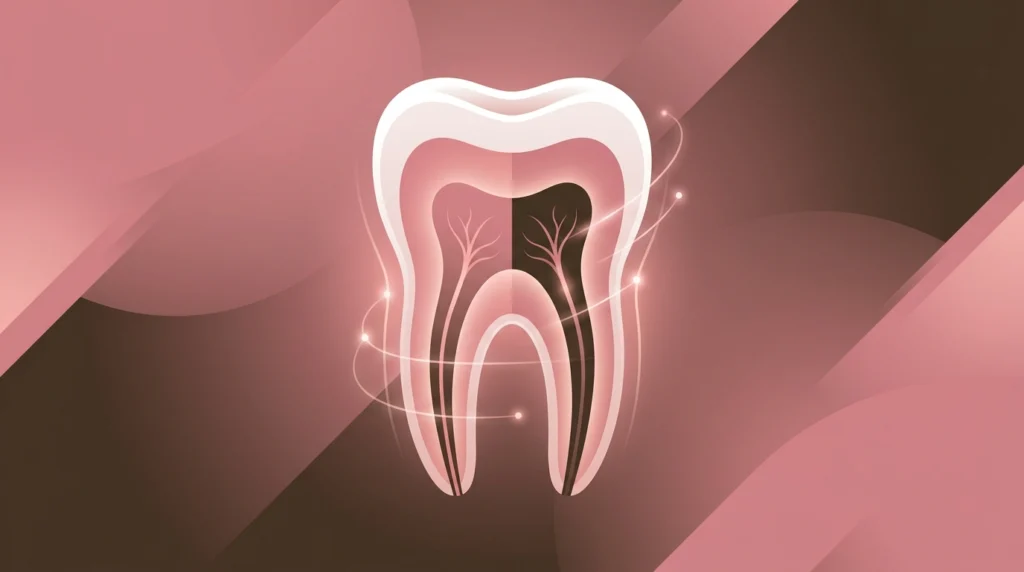
Beneath the tooth’s visible hard structure are dentine and living tissue called the pulp. The pulp consists of nerves, blood vessels and connective tissue. When decay progresses into this area, bacteria can cause inflammation of the pulp.
In the early stages, cold or sweet foods may cause brief sensitivity. As decay progresses, pain may last longer and throbbing may begin, particularly at night. In some cases, pain may decrease as the pulp loses its vitality. However, this does not mean that the problem has resolved itself.
Blows to a tooth can also affect the pulp. Following trauma, particularly to front teeth, a tooth may gradually change colour, become sensitive or lose its vitality.
When a problem involving the internal tissues of a tooth is suspected, a clinical examination and any necessary radiographic assessment should therefore be carried out together.
When Might Treatment Be Needed?
Not all toothache has the same cause, and sensitivity does not always require root canal treatment. The decision is made after assessing examination findings and any necessary imaging.
The following conditions may increase the likelihood of needing endodontic treatment:
- Deep, advanced tooth decay
- Irreversible inflammation of the pulp
- Infection inside the tooth
- Significant trauma to the tooth
- Certain cracks and fractures
- Previous large fillings
- Recurring restoration problems
- Infection or an abscess around the root
- Reinfection of a previously treated tooth
Pain that persists after contact with hot or cold, throbbing that wakes you at night and sensitivity when chewing deserve particular attention.
Some patients experience severe pain, while others notice only mild discomfort when chewing. Some infections may even be found during a routine check-up without causing any symptoms.
This highlights the importance of regular check-ups. To maintain oral and dental health, attending at appropriate intervals is a better approach than seeing a dentist only when pain occurs.
How Can Symptoms Be Recognised?
Symptoms of problems inside a tooth are not the same for every patient. Nevertheless, certain complaints deserve particular attention.
A dental assessment is needed if sensitivity after a hot drink or cold food does not settle quickly, if spontaneous throbbing develops or if you experience pain at night.
Pain in a particular tooth when chewing is also an important finding. Sensitivity when pressing on a tooth or eating hard food may indicate a problem with the tissues around its root.
Other symptoms to consider include swollen gums, tenderness around the root, recurring abscesses, a bad taste in the mouth or a change in tooth colour.
Symptoms alone cannot establish a definite diagnosis. The same complaints may occur with different dental problems.
How Is the Procedure Performed?
The process can vary according to the condition of the tooth and the anatomy of its root canals. It generally consists of several main stages.
Examination and Diagnosis
First, the dentist listens to the patient’s symptoms and assesses the affected tooth in detail. Where necessary, X-rays are taken to examine the roots, surrounding tissues and the general condition of the tooth.
Diagnosis involves more than the tooth’s appearance. The dentist also considers when pain began, its relationship to hot and cold, whether it occurs when chewing and whether the tooth has been treated before.
In some cases, different tests are used to assess the pulp. This helps determine the most appropriate treatment.
Local Anaesthesia
Local anaesthetic is administered to the area before the procedure to help keep the patient comfortable during treatment.
Modern anaesthetic techniques can provide substantial pain control. Some teeth with active infection may require particularly careful anaesthetic management.
Accessing the Inside of the Tooth
Once the tooth is adequately numb, decayed and damaged tissue is removed. The area containing the pulp is then accessed.
It is important to isolate the working area from the oral environment as much as possible. Isolation methods such as a rubber dam may therefore be used in suitable cases.
Cleaning the Root Canals
The pulp is removed using specialised endodontic instruments. The root canals are then cleaned using mechanical and chemical methods.
The aim is not simply to remove nerve tissue. It is also to remove as much bacteria, infected tissue and debris as possible from the canals.
Root canal anatomy differs between teeth. Front teeth may have simpler canals, while molars can have several canals and more complex anatomy.
Accurate assessment of the tooth’s anatomy is therefore important when planning treatment.
Filling the Canals
After cleaning and shaping, the canals are filled with an appropriate material. The aim is to prevent the cleaned canal system from being contaminated again by microorganisms as far as possible.
The upper part of the tooth must also be properly sealed after the canals are filled. Protecting a root-treated tooth from the oral environment is important for long-term use.
Restoring the Tooth
Restoration is one of the final stages of treatment. Different options may be considered according to how much healthy structure remains and the tooth’s position in the mouth.
A composite filling may be sufficient for smaller losses of tooth structure. Where more structure has been lost, restorations such as an onlay, overlay or crown may be considered.
Back teeth are exposed to greater chewing forces, so appropriate protection is especially important for teeth with substantial structural loss.
Does Root Canal Treatment Hurt?
“Does root canal treatment hurt?” is one of the questions patients most often ask their dentist.
Local anaesthetic is used with the aim of treating the patient without pain or with as little discomfort as possible. Current anaesthetic techniques offer important advantages for pain control.
However, the process may differ somewhat for teeth with severe pain and active infection before treatment. In these cases, the dentist may assess the anaesthesia and use additional methods if necessary.
Mild sensitivity, a feeling of pressure or tenderness when chewing may occur for a few days afterwards. These symptoms are generally temporary.
If pain increases, noticeable swelling develops or symptoms last longer than expected, reassessment is needed.
How Long Does the Procedure Take?
Treatment time is not the same for every tooth. Its position, number of canals, root anatomy, infection status and any previous treatment can affect the duration.
A front tooth with one canal may take a different amount of time from a molar with several canals. The treatment plan for an infected tooth may also differ.
It is therefore inappropriate to give an exact duration based solely on the type of tooth. A more realistic treatment plan can be made after an examination.
How Many Appointments Are Needed?
Some cases can be completed in one appointment. One visit may be sufficient where conditions are suitable and infection is more limited.
However, several appointments may be needed in some cases involving advanced infection, extensive microbial contamination of the canals or a previously treated tooth.
The number of visits is determined by the tooth’s clinical and radiographic condition, rather than pain intensity alone.
Will There Be Pain After Treatment?
Mild pain or sensitivity can occur afterwards. Brief tenderness may be noticeable, especially when pressing on the tooth or chewing.
This does not mean that treatment has failed. The tissues around the root may be affected during the procedure, and the body’s temporary response can cause sensitivity.
Severe, increasing pain should not be considered normal. If symptoms such as significant gum swelling, fever, facial swelling or severe pain develop, contact a dentist promptly.
What Should You Do After Treatment?
After the procedure, the tooth should be protected from excessive force until its restoration is completed.
Particularly where a temporary filling is present, you may be advised to avoid chewing hard or sticky foods on that side. Eating before the anaesthetic has completely worn off can also lead to accidentally biting your lip or cheek.
It is important to maintain oral care. Teeth and gums around the treated tooth should be kept healthy.
Brushing and cleaning between the teeth should continue as part of daily care. Recommended follow-up appointments should also be attended.
How Long Can the Natural Tooth Last?
A treated tooth can function for many years when properly restored. However, treating the inside of the canals alone is not enough.
The amount of healthy structure remaining, the suitability of the restoration, oral hygiene, chewing forces and habits such as clenching can influence the tooth’s future.
Delaying restoration may increase fracture risk, particularly in teeth with substantial structural loss. Planning the final restoration promptly after endodontic treatment is therefore important.
Can a Treated Tooth Hurt Again?
Pain may return later in a previously treated tooth for several reasons.
These include canals that were not identified because of a complex canal system, microorganisms remaining in the canals, leakage around a restoration or new decay.
A crack or fracture in the tooth may also cause pain.
In this situation, a clinical examination should be performed first, followed by radiographic assessment where necessary.
Why Might Treatment Fail?
Many factors influence the outcome of endodontic treatment. Important examples include tooth anatomy, the complexity of the root canal system, the extent of infection, the condition of the restoration and oral care habits.
Very narrow, curved or anatomically complex canals may require particular care.
Properly sealing the upper part of the tooth after treatment is also important. Bacteria re-entering from the oral environment can cause reinfection of the canal system.
The restoration placed after the procedure is therefore an integral part of the treatment process.
What Is Retreatment?
Endodontic retreatment may be considered if infection or a persistent problem is identified in a previously treated tooth.
During retreatment, the existing canal filling materials are removed. The root canals are reassessed, cleaned and shaped as necessary, then filled again.
Retreatment is not suitable for every tooth. The remaining healthy structure, roots, restoration and current infection are assessed together.
In some cases, surgical endodontic treatment or other options to preserve the tooth may also be considered.
Why Is Preserving a Natural Tooth Important?
Preserving natural teeth is important for maintaining oral function. Extraction affects more than the loss of one tooth: it may also influence neighbouring tooth positions, chewing balance and future restorative procedures.
Not every tooth can be preserved, of course. Extraction may be necessary where saving the tooth is impossible.
However, if appropriate treatment may allow the tooth to remain in the mouth, that option is assessed in detail.
The Difference Between Root Canal Treatment and Extraction
The main aim of root canal treatment is to keep the natural tooth in the mouth. Extraction removes a tooth that cannot be saved.
Extraction may be considered where there is a serious root fracture, extensive structural loss or a tooth that cannot be restored.
In contrast, preserving the natural tooth may be preferred when sufficient healthy structure remains and the internal problem can be treated.
After extraction, options such as an implant, bridge or removable denture may be considered to replace the missing tooth. The decision should therefore take account of the tooth’s long-term condition, rather than the current pain alone.
A Filling or a Crown After Treatment?
Not every treated tooth necessarily needs a crown. The restoration is selected according to the remaining structure, tooth position and chewing load.
A composite restoration may be sufficient for some teeth with less structural loss. More robust restorative options may be considered for back teeth with extensive loss.
The existing tooth structure and the patient’s chewing habits are also considered during this assessment.
What Is Endodontics?
Endodontics is the dental specialty concerned with the pulp and root canal systems. Root canal treatment is one of its best-known procedures.
Endodontic care is not limited to teeth receiving treatment for the first time. It may also include assessing previously treated teeth with recurring problems, retreatment and certain surgical procedures.
Detailed assessment of the tooth’s internal structure helps determine the appropriate treatment method.
Maintaining Oral and Dental Health
Regular oral care is one of the most important steps in avoiding the need for an endodontic procedure. Brushing at least twice daily with an appropriate technique, cleaning between teeth and having regular dental check-ups are important.
Treating decay early can help prevent problems from progressing into deeper tooth tissues.
Oral care should therefore focus on preventing new problems as well as relieving existing pain.
Visit our General Dentistry page to learn about assessments and treatment options for different oral health needs at Örge Dental Clinic.
Patients seeking broader information can find an overview of procedures and areas of care on our dental treatments page.
Where a tooth needs restoration after treatment, options for replacing missing or damaged tooth structure may be considered within Prosthodontics.
Frequently Asked Questions
What is root canal treatment?
It involves removing irreversibly damaged or infected pulp from inside a tooth, cleaning the root canals and filling them with suitable materials. The main aim is to preserve the natural tooth as far as possible.
Does root canal treatment hurt?
Local anaesthetic is used to help control pain during treatment. Mild sensitivity or tenderness when chewing may occur for a few days afterwards.
How many appointments are needed?
Some cases can be completed in one appointment. Several visits may be needed depending on infection, tooth anatomy and previous treatment.
How long does it take?
Duration varies according to the tooth’s position, number of canals and anatomy. The specific duration can therefore be determined following an examination.
How many days does pain last afterwards?
Mild sensitivity or tenderness when chewing may last a few days. Severe or increasing pain requires reassessment.
Why does a treated tooth hurt again?
Reinfection, new decay, restoration problems, cracks or anatomical features of the canal system can cause pain to return.
Can infection return?
Yes. Reinfection may develop if microorganisms remain in the canal system, a restoration leaks or new decay occurs.
Can a root canal be performed instead of extraction?
If the tooth can be saved, treatment to preserve it may be considered. However, not every tooth can be saved.
Will a treated tooth last a lifetime?
A properly treated and restored tooth can last many years. However, oral care, the restoration, chewing forces and clenching can affect the outcome.
Can I eat after the procedure?
Eating before the anaesthetic wears off may not be recommended. Hard foods may need to be avoided where a temporary restoration is present.
Does a treated tooth need a crown?
A crown may be necessary depending on the remaining healthy structure and tooth position. Protective restoration can be especially important for back teeth with substantial structural loss.
What happens if treatment fails?
The tooth is reassessed first. Endodontic retreatment may be performed in suitable cases. Other treatment options may also be considered in some situations.
Can it be performed during pregnancy?
Necessary dental treatment during pregnancy can be planned with regard to the stage of pregnancy and the need for treatment. The dentist should appropriately assess the medicines and imaging methods to be used.
When Should You See a Dentist?
Do not delay a dental examination if you experience severe or recurring toothache, persistent sensitivity to hot and cold, pain when chewing, swollen gums, facial swelling, tooth discolouration or a bad taste in your mouth.
Relief after taking painkillers does not mean that the problem has gone away. Pain may be temporarily suppressed while underlying decay, infection or a pulp problem persists.
More serious symptoms such as significant facial swelling, fever or difficulty swallowing or breathing require urgent assessment.
A clinical examination to identify the source of the problem is a better approach than trying to diagnose toothache yourself.
Conclusion: Treatment to Preserve the Natural Tooth
Root canal treatment is used to treat serious damage or infection inside a tooth and keep the natural tooth in the mouth as far as possible.
The need for treatment is not determined by pain alone. Symptoms, clinical examination findings and any necessary radiographic assessments should be considered together.
Proper restoration after the procedure and continued oral care are also important parts of treatment. Regular check-ups allow the treated tooth to be monitored and new oral health problems to be identified early.
If you have persistent sensitivity, night pain, discomfort when chewing or swelling, a dental assessment is important to establish the cause.
Scientific Source
For more detailed scientific and patient information about endodontic treatments, visit the American Association of Endodontists’ patient resources.